
Curious about Da Hong Pao price? This guide breaks down why some Da Hong Pao is expensive and others cheap, what you’re really paying for, and how to avoid low-quality tea. Honest advice for beginners.
You’ve seen the prices: one seller offers Da Hong Pao for $35 per 100g, another asks $450 for the same weight. Suddenly you’re wondering — why is Da Hong Pao so expensive? And more importantly, which one is actually worth buying?
If you’re new to this famous Wuyi oolong, the huge price differences can feel confusing and a little intimidating. Don’t worry. In this guide, I’ll walk you through what really drives the Da Hong Pao price so you can make a smart choice without overpaying or buying something disappointing.
Why Is Da Hong Pao Expensive? The Honest Breakdown
Da Hong Pao is a premium Wuyi rock tea (yancha). Its price isn’t just marketing hype — it comes from real limitations in nature, labor, and skill. Here’s what you’re actually paying for:
1. Terroir (The Place It Grows)
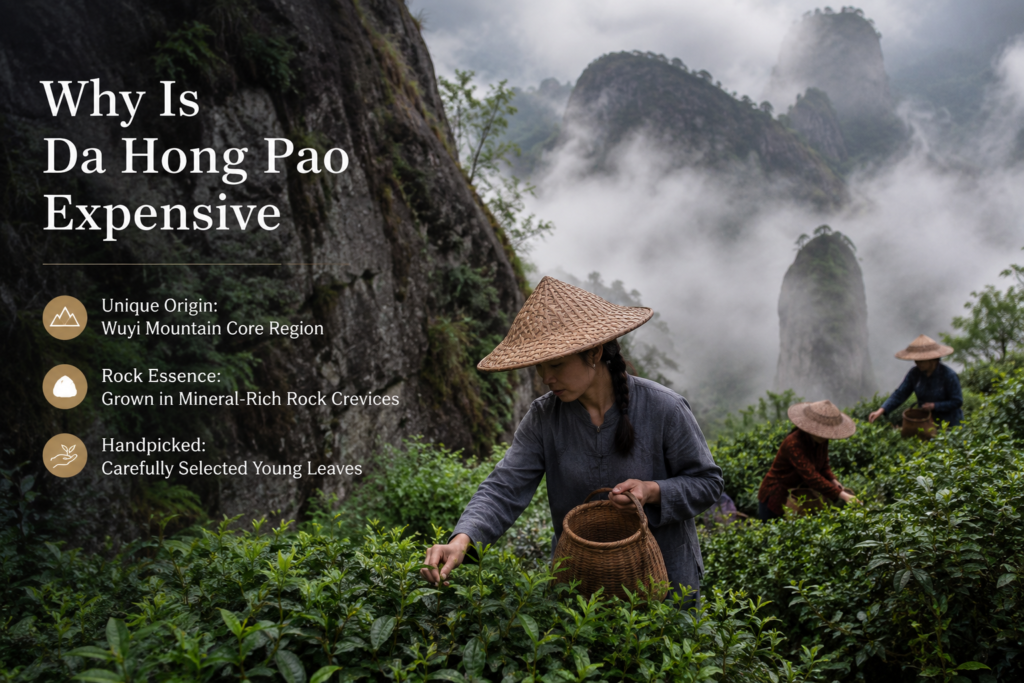
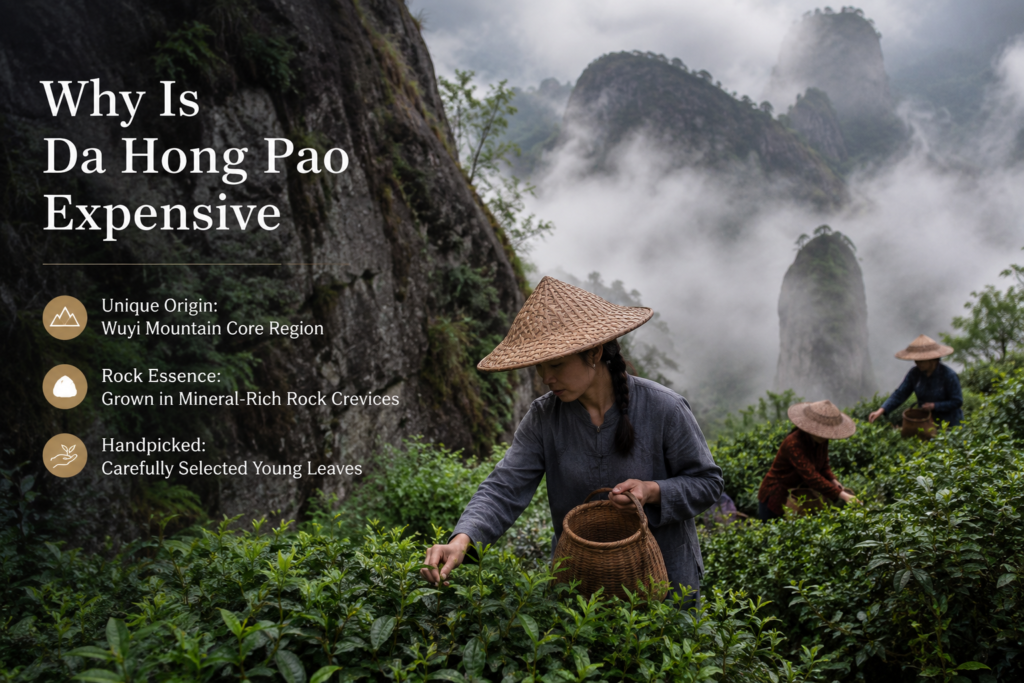
The most expensive Da Hong Pao comes from the Zhengyan (core rock) area of the Wuyi Mountains. These rocky cliffs have unique mineral-rich soil that gives the tea its signature “rock essence” — a deep, clean, mineral sweetness you can’t get anywhere else.
Outer mountain (Waishan) teas are more affordable and can still taste very good, but they usually lack that intense rocky complexity.
2. Hand Harvesting & Low Yield
True high-quality Da Hong Pao is hand-picked, often only the tender buds and top leaves in spring. The bushes grow on steep rocky terrain, so machines can’t be used. One skilled picker might only harvest a few kilograms per day. This limited supply naturally pushes the price up.
3. Traditional Craftsmanship
Making great Da Hong Pao is labor-intensive:
• Precise withering and oxidation control
• Multiple rounds of roasting (sometimes over charcoal)
• Years of experience to get the roast level just right
Handmade tea like ours takes significantly more time and skill than factory-produced versions. That’s why it costs more — but you taste the difference in every sip.
4. Aging Potential & Storage
Well-made and properly stored Da Hong Pao can improve for several years. This extra care and patience adds to the cost.
Realistic Da Hong Pao Price Ranges (2025–2026)
Here’s what you can expect in today’s market:
• $40–$90 per 100g: Entry-level blends, often Waishan or heavily blended. Drinkable for daily use but usually lacks depth and rock character.
• $100–$220 per 100g: Good quality, mostly handmade Wuyi yancha with decent origin. This is the sweet spot for most beginners.
• $250–$550 per 100g: Premium Zhengyan or single-variety Da Hong Pao with excellent craftsmanship and clear terroir. Noticeably more complex and satisfying.
• $600+ per 100g: Top-tier aged or limited-production Zhengyan teas for serious enthusiasts and collectors.
Rule of thumb: If the price is much lower than $0.80–$1 per gram, something is usually being compromised — lower altitude leaves, machine processing, excessive re-roasting of old tea, or even fake blends.
Why Some Da Hong Pao Is Cheap (And Why You Should Avoid It)
Cheap Da Hong Pao almost always comes with trade-offs:
• Mass-produced in factories with shorter roasting times
• Leaves from lower-grade gardens or even non-Wuyi regions
• Heavy blending with cheaper oolongs
• Old or poorly stored leaves re-roasted to hide weaknesses
• Overuse of flavoring or charcoal powder (common trick)
The result? Tea that tastes flat, bitter, smoky in a bad way, or just “okay” at best. You might drink it once and never want it again.
At our workshop, we deliberately choose the slower, more expensive handmade route because it preserves the true character of Da Hong Pao. Yes, it costs more — but you get tea you actually look forward to drinking every day.
What You Should Focus On Instead of Just Price
When comparing Da Hong Pao price, look beyond the number:
• Clear origin details (Zhengyan? Specific village?)
• Harvest year (fresher is usually better for beginners)
• Roast level (medium roast is most beginner-friendly)
• Leaf quality photos and honest tasting notes
• Small packing options
Smart Buying Advice: Start Small and Smart
Don’t drop a lot of money on your first purchase. The best way to learn is by trying.
This is exactly why we recommend our 8g–9g individual packs. They let you:
• Test different roast levels and origins without risk
• Keep every pack fresh until you open it
• Discover your personal preference (some people love bolder roasts, others prefer smoother ones)
• Avoid the regret of buying a big bag of tea you don’t love
Small packs may seem less economical at first, but they save you money in the long run by helping you buy smarter.
Final Thoughts
Understanding Da Hong Pao price helps you appreciate why real handmade Wuyi rock tea costs what it does. You’re not just buying leaves — you’re paying for rare terroir, skilled hands, and a centuries-old tradition.
If you want a genuine Da Hong Pao experience without the stress of guessing, our handmade selections in convenient small packs are designed specifically for tea lovers like you. Many beginners tell us it’s the first tea that made them truly fall in love with oolong.
Great tea shouldn’t be confusing or disappointing. It should bring joy, one mindful cup at a time.
Ready to find your favorite Da Hong Pao? Start with something honest and well-crafted — your taste buds will thank you.