
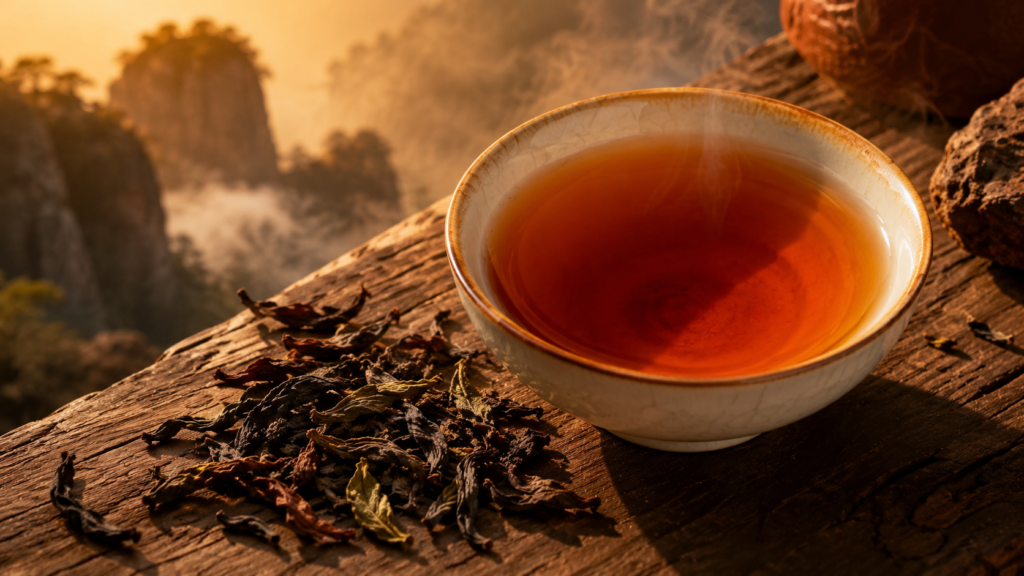
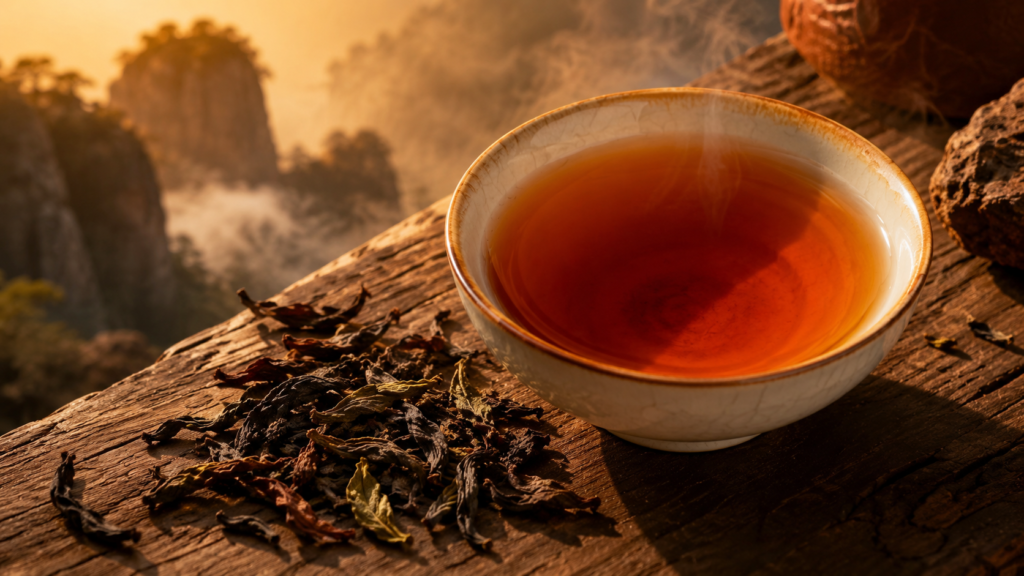
Da Hong Pao (大红袍), or Big Red Robe, is one of China’s most legendary Wuyi Rock Teas (Yancha). Known for its rich roasted aroma, mineral “rock rhyme” (岩韵), complex layers of flavor, and lingering sweet aftertaste, authentic Da Hong Pao stands out among oolong teas.3640
However, the market is flooded with fakes, low-quality blends, and overpriced ordinary teas. Beginners often get scammed by attractive packaging or unrealistic claims. This guide helps new buyers judge quality, avoid common pitfalls, and start with smart small-pack purchases.19
What Makes Da Hong Pao Special?
True Da Hong Pao comes from the Wuyi Mountains in Fujian Province. The unique rocky terroir, misty climate, and traditional charcoal roasting create its signature profile:
- Aroma: Roasted notes with hints of charred pine, dried longan, orchid, or caramel.14
- Taste: Full-bodied with mineral depth, subtle floral/fruity notes, and a smooth, sweet lingering aftertaste (Yan Yun).
- Liquor: Bright amber to orange-red, clear, often with a golden “tea halo” around the cup edge.40
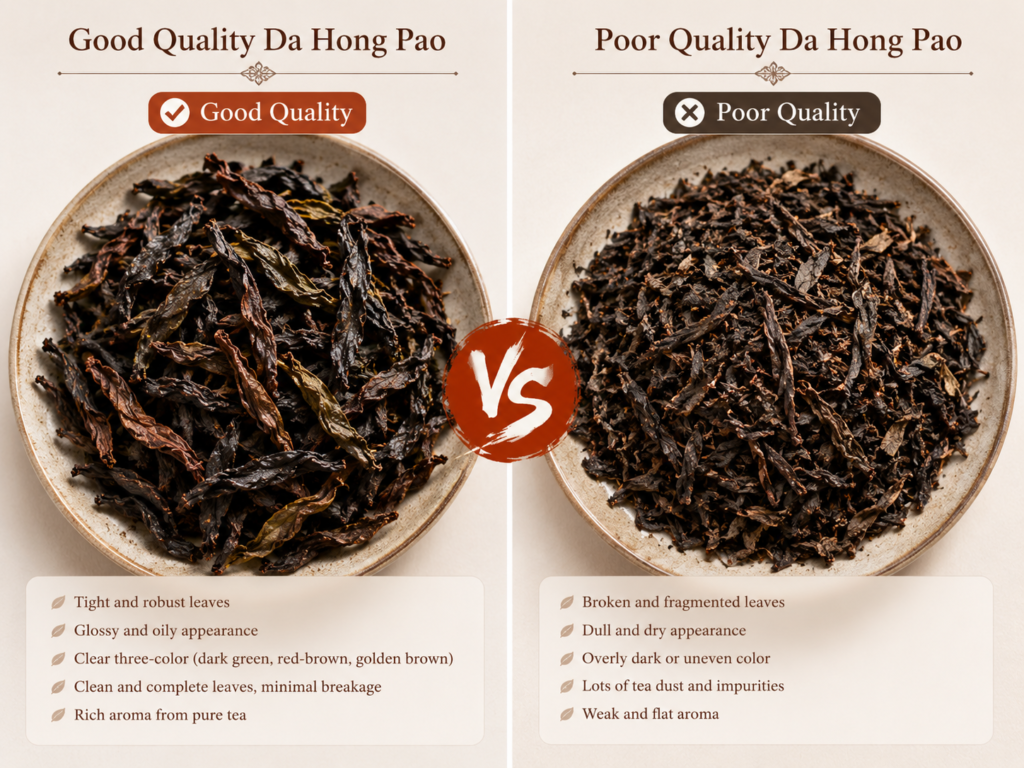
- Leaves: Tightly rolled, with a three-color gradation (dark brown, russet, olive/greenish-brown), glossy appearance.14
Important note: Almost all commercial Da Hong Pao is a blended cultivar tea (often from Qi Dan or similar varieties propagated from the original mother trees). Tea from the few original ancient mother trees is extremely rare, mostly reserved for state use, and not realistically available on the market. Claims of “original mother tree” are almost always fake.5
How Beginners Can Judge Good vs. Bad Da Hong Pao
Use these practical checks when buying or tasting:
- Appearance of Dry Leaves
Good leaves are tightly twisted or knotted like ropes, uniform in size, with a glossy sheen and mixed dark greenish-brown to reddish hues. Avoid dusty, broken, overly black, or uniformly green/brown leaves.36 - Aroma (Dry and Wet)
Dry leaves should have a warm roasted fragrance. After brewing (especially in a gaiwan), look for complex notes that are not just smoky or burnt. High-quality tea evolves across infusions. - Brewed Liquor and Taste
- Color: Bright, transparent amber-red (not muddy or too pale/dark).
- Mouthfeel: Smooth yet bold, with mineral rock character and no harsh bitterness (unless over-brewed).
- Aftertaste: Lingering sweetness and “rock rhyme” that returns in the throat. Good tea can be steeped 7–9+ times.36
- Origin and Processing
Look for “Zheng Yan” (core production area) or clear Wuyi Mountain sourcing. Avoid vague labels. Proper medium-to-heavy charcoal roasting is key—poor roasting leads to flat or overly bitter tea.27
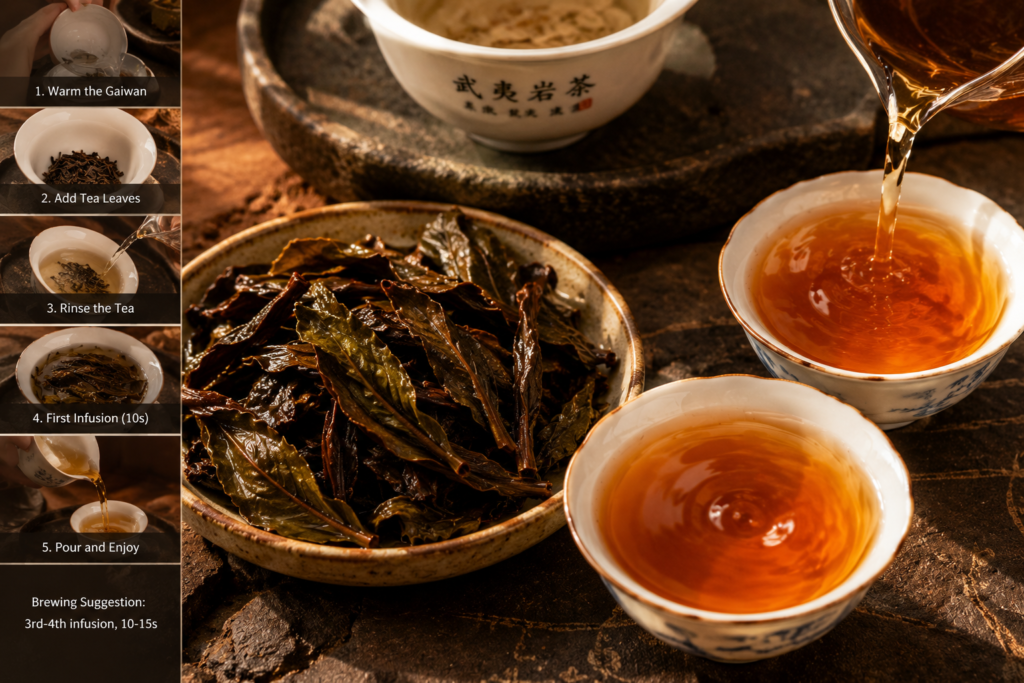
Pro Tip: Buy a small sample (10–20g) first and brew Gongfu style (small vessel, multiple short infusions) to properly evaluate.21
Avoid These Common Scams and Pitfalls
- Suspiciously Cheap “Authentic” Tea: Genuine Wuyi Rock Tea has real production costs. Extremely low prices often mean low-grade leaves, summer harvest, or non-Wuyi origins reprocessed with heavy roasting to mask flaws.2
- Fake Mother Tree Claims: Ignore any seller pushing “original ancient trees” at consumer prices.
- Over-Roasted or Reprocessed Tea: Tastes like pure charcoal or has a burnt/carbon powder aftertaste. Some vendors re-roast old or spent leaves.6
- Misleading Packaging: Fancy boxes or “limited edition” claims without transparent sourcing.
- Non-Reputable Sellers: Buy from vendors with good reputations, detailed origin info, and preferably samples or reviews from experienced tea drinkers. Avoid random e-commerce listings without provenance.1
Price guide: Reasonable daily-drinker Da Hong Pao starts around $50–150+ per 100–250g depending on grade. Premium examples cost more but deliver better value per infusion.
Why Start with Small Packages? Smart Buying Logic
For beginners, small packaging (25g, 50g, or sample sizes) is the best approach:
- Test Before Committing: Da Hong Pao flavor is complex and roasting levels vary (light, medium, heavy). Small packs let you try different styles to find your preference.
- Freshness: Tea stays fresher in smaller sealed packs. Large cheap bags often sit stale on shelves.
- Low Risk: Experiment without wasting money on a big tin you might not enjoy.
- Build Knowledge: Compare a few small batches from different vendors to train your palate.
Once you find a favorite, move to larger quantities from the same reliable source.
Final Tips for Buying Good Da Hong Pao
- Prioritize vendors who provide clear Zheng Yan or Wuyi origin details, harvest year, and roasting info.
- Read independent reviews and tea community feedback (e.g., forums or groups focused on Gongfu tea).
- Store properly: Airtight, cool, dark place. Aged Da Hong Pao can improve but needs correct conditions.
- Brew correctly: Use 5–7g per 100–150ml, 95–100°C water, short infusions (first 10–20s, then build).
Choosing quality Da Hong Pao takes a bit of learning, but the rewarding, layered experience of a great cup makes it worthwhile. Start small, focus on taste and origin over hype, and you’ll avoid scams while discovering why this “King of Oolong” has captivated tea lovers for centuries.10
Ready to explore? Look for reputable sources offering sample sizes and transparent Wuyi Rock Tea selections. Your perfect Da Hong Pao is out there—happy brewing!
Keywords targeted: how to choose Da Hong Pao, buy Da Hong Pao, authentic Da Hong Pao, Wuyi rock tea guide.